1. IT security: importance, standards, and management within the organisation
2. What does IT security mean?
3. IT security needs structure: the IT security concept
4. IT security and information security: what is the difference?
5. What is IT security management?
6. Which IT security standards exist?
7. Typical threats to IT security
8. Types of IT security in companies
9. Effective measures for IT security
10. Implementing IT security successfully with i-doit
11. Conclusion: IT security is a management priority
Organisations have long been digitally networked, working in a data-driven manner and relying on stable IT systems. However, this is exactly what makes them vulnerable—cybercriminals know the weak points and exploit them purposefully. Data breaches and economic damage are no longer exceptions.
IT security is therefore not a "nice-to-have," but a critical success factor. A functioning security concept supports you in defending against cyberattacks at an early stage and strengthening the trust of customers and partners. Find out what IT security specifically means in a corporate context, how to build effective IT security management, and how to anchor IT security in your organisation for the long term.
Cybercriminals are increasingly targeting confidential data, critical infrastructures, and digital business processes—and their attacks are becoming more sophisticated. This is precisely where IT security comes in: it protects your company from real threats. Specifically, this refers to the protection of all information and communication systems against attacks, unauthorised access, data loss, or deliberate manipulation.
The goal is to ensure the confidentiality, integrity, and availability of your digital information at all times. This requires more than individual tools or firewalls—a holistic security concept is required.
Every security measure must contribute to the three classic protection goals:
A functioning IT security concept is the foundation of a holistic security strategy. It answers central questions: Which information and systems are particularly worthy of protection? What threats exist? And what protective measures are required?
The starting point is a detailed inventory of the IT infrastructure: Which systems are in use? Which applications run on them? Who has access and with what permissions? Support is provided by a Configuration Management Database (CMDB). It records all IT components in a structured manner and creates the necessary transparency.
This is followed by a risk assessment: What vulnerabilities exist? What threats are realistic? Only then can you develop and prioritise targeted IT security measures. A well-documented concept enables your organisation to close existing security gaps and prepare for potential cyberattacks.
IT security and information security are often used synonymously—yet they have different focal points:
An example illustrates the difference: the encryption of data is a typical element of IT security. The regulated access to confidential personnel files, on the other hand, falls within the scope of information security.
The goal of both disciplines is the same: they should reliably ensure the core values of confidentiality, integrity, and availability (the CIA principle). Both disciplines are also interdependent: strong IT security is the basis for information security—and without information security processes, technical protection often remains ineffective.
IT security management encompasses all organisational and strategic measures with which companies plan and implement their IT security. The goal is to anchor security requirements sustainably in corporate practice. This is not just about technology. Equally decisive are clearly defined processes, roles, and responsibilities: Who is responsible for what? How is coordination handled in an emergency? What control mechanisms are in place?
Effective IT security management ensures that protective measures are regularly checked, documented, and improved. Companies that use an Information Security Management System (ISMS) take an important step towards structural security. They create transparency, traceability, and accountability in dealing with IT risks.
In an increasingly networked and regulated world, established IT security standards provide reliable guidelines for the protection of digital resources. They create clear structures, promote uniform processes, and enable companies to meet compliance requirements.
Particularly common standards include:
These frameworks support your organisation in planning, documenting, and proving security measures in audits. Depending on the industry, IT landscape, and regulatory environment, the choice of a specific model for IT security standards may be particularly useful.
Whether it is ransomware, phishing, DDoS attacks, or malware such as Trojans and spyware: IT systems are under constant fire. The aim is often sabotage, extortion, or the theft of sensitive data. Furthermore, attacks are becoming more sophisticated and aggressive. However, human error is also a central risk factor: misconfigurations, insecure passwords, or a lack of security awareness provide attackers with numerous opportunities.
In addition, technical failures—for example, due to outdated systems or hardware defects—endanger the stability of the IT infrastructure. Even natural events such as fires or floods can become a security risk. An effective IT security concept must address threats holistically—through preventive, detective, and reactive measures alike.
IT security is created through the interaction of various measures that interlock on technical, physical, and organisational levels. Each of these levels makes an important contribution to risk minimisation and the stability of the IT infrastructure.
The rule is: only when all levels actually interlock can confidentiality, integrity, and availability be guaranteed in the long term.
To strengthen IT security, a combination of different approaches is recommended. Companies should rely on both technical protective mechanisms—such as regular security updates, firewalls, and encryption technologies—and organisational measures. These include clear responsibilities, documented processes, and structured security policies. Both aspects are equally decisive for an effective security concept.
The sensitisation of employees also plays a central role:
A balanced combination of technical security, clear organisational structures, and trained employees increases the resilience of IT in the long term. This allows you to react in a structured, fast, and effective manner in an emergency.
With i-doit, you implement IT security in your organisation in a structured manner. As a central platform for IT documentation, the software enables a complete inventory of all IT components, their dependencies, and protection requirements. This makes it visible which areas are particularly worthy of protection.
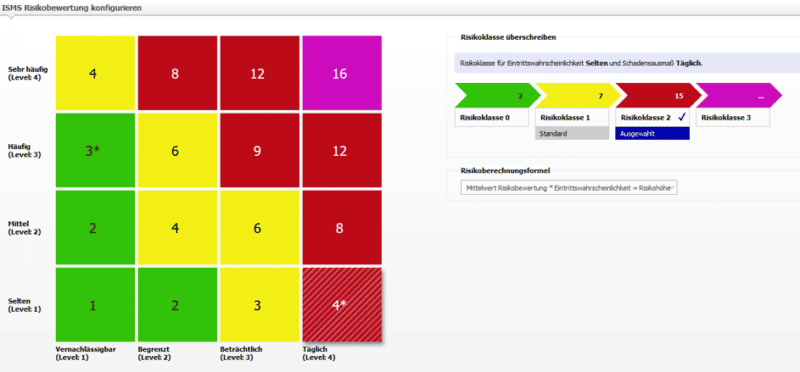
The i-doit ISMS Add-on supports you in building an information security management system capable of certification. Risks can be evaluated directly on assets and services, and measures can be documented and controlled. The combination of technical documentation and active security management reduces complexity and increases the ability to react in an emergency.
Source: becon.de
By viewing IT security as an ongoing process, you develop your IT into a strategic success factor. You not only protect sensitive data and systems but also support stable business processes, meet regulatory requirements, and strengthen your market position. In other words: you create trust, reduce risks, and lay the foundation for competitiveness in a digitally networked world.
Are you thinking about IT security holistically and want to anchor it permanently in your organisation? We will show you how i-doit can actively support you.