
i-doit Suite+ Emergency
Intelligent IT emergency planning with CMDB integration
Efficiently implement emergency plans, BCM processes, and recovery strategies — thanks to CMDB integration and a networked GRC ecosystem, you maintain an overview of escalation processes in an emergency and sustainably secure your organization's operational capability. Available in the Cloud or On Premises.
4.7/5 on Capterra | 2.000+ satisfied customers

IT emergency management system
From emergency response to recovery planning – efficient, coordinated, and embedded in your entire GRC ecosystem

Maintain emergency plans, risks, and processes once – thanks to a shared database with ISMS and Data Protection, redundant data entry is eliminated
CMDB Integration with i-doit up
Native integration in i-doit up with free base license

Benefits of your IT emergency management
Native integration of i-doit up CMDB
Create scenarios and simulations of crises
All Suite+ products are available in the Cloud and On Premises
ISMS, Emergency Planning, Data Protection & BCM in one central environment
Defined roles and escalation paths ensure that in an emergency, everyone knows what to do
All emergency plans, responsibilities, and measures are centrally traceable
Clear structures avoid gaps and inconsistencies
Grows with additional emergency scenarios and locations
i-doit Suite+ emergency feature overview
The next-gen emergency platform in the cloud & on-premises
i-doit Suite+ emergency overview
In 4 steps to optimal IT emergency planning
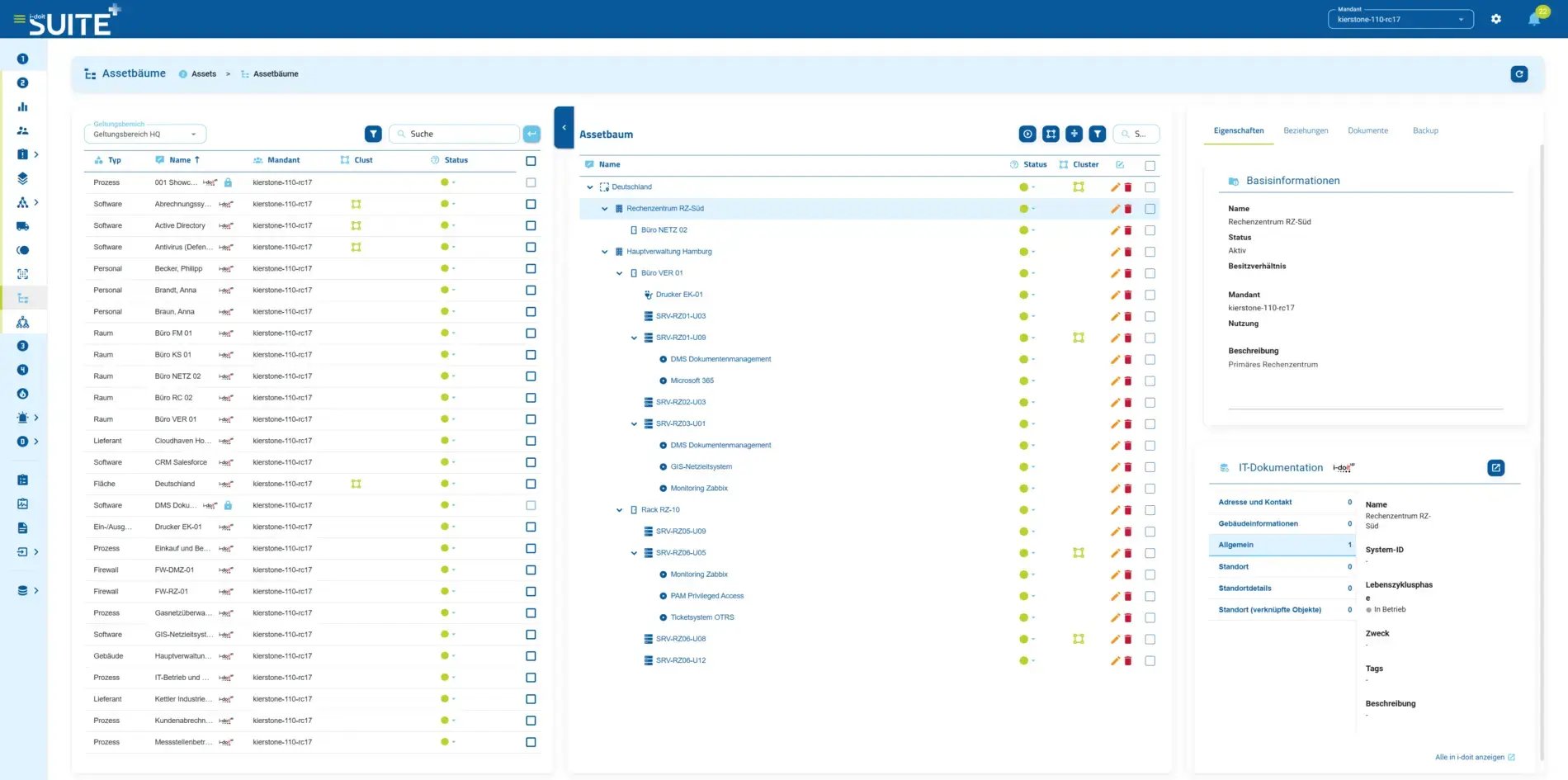
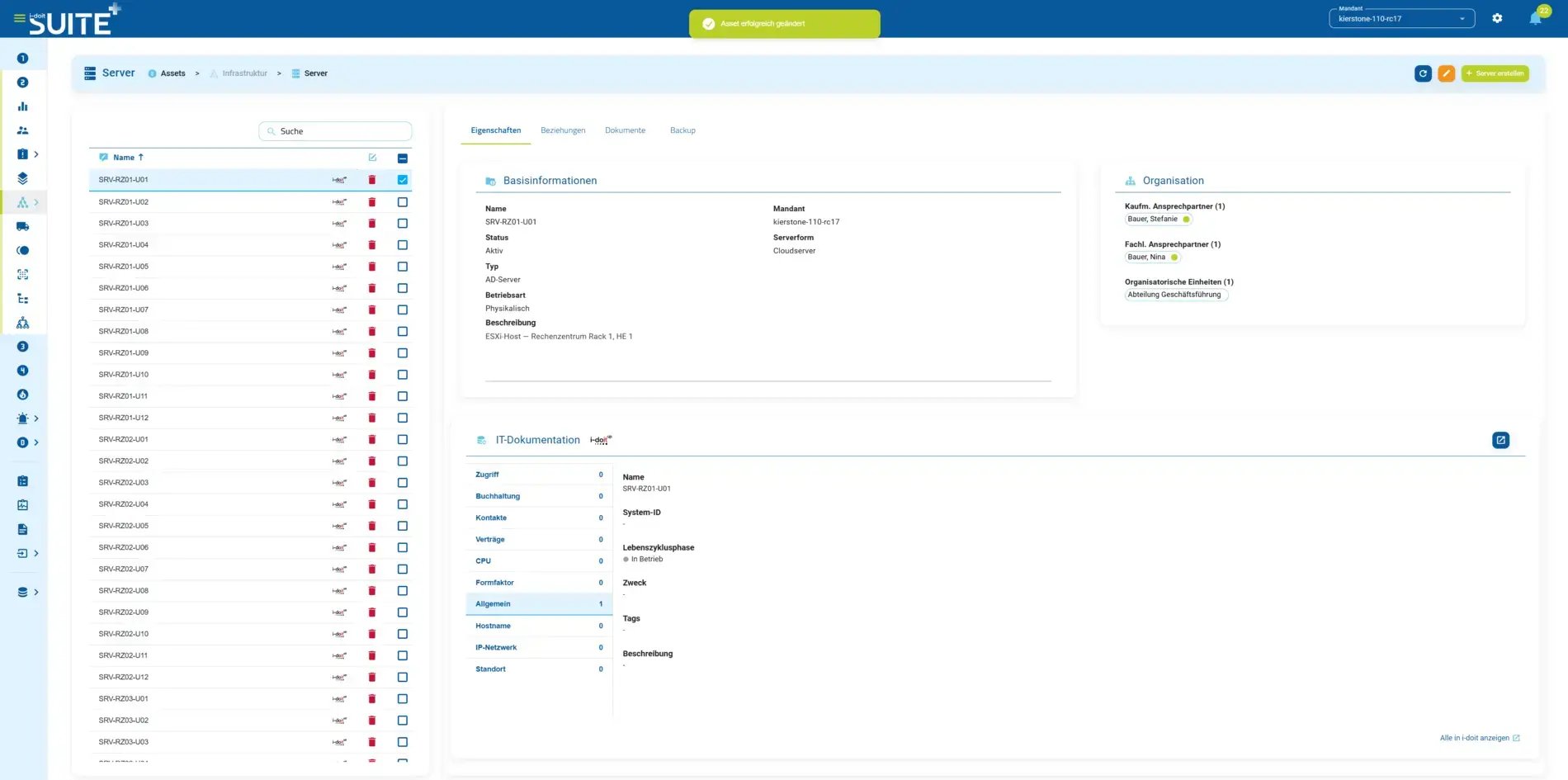
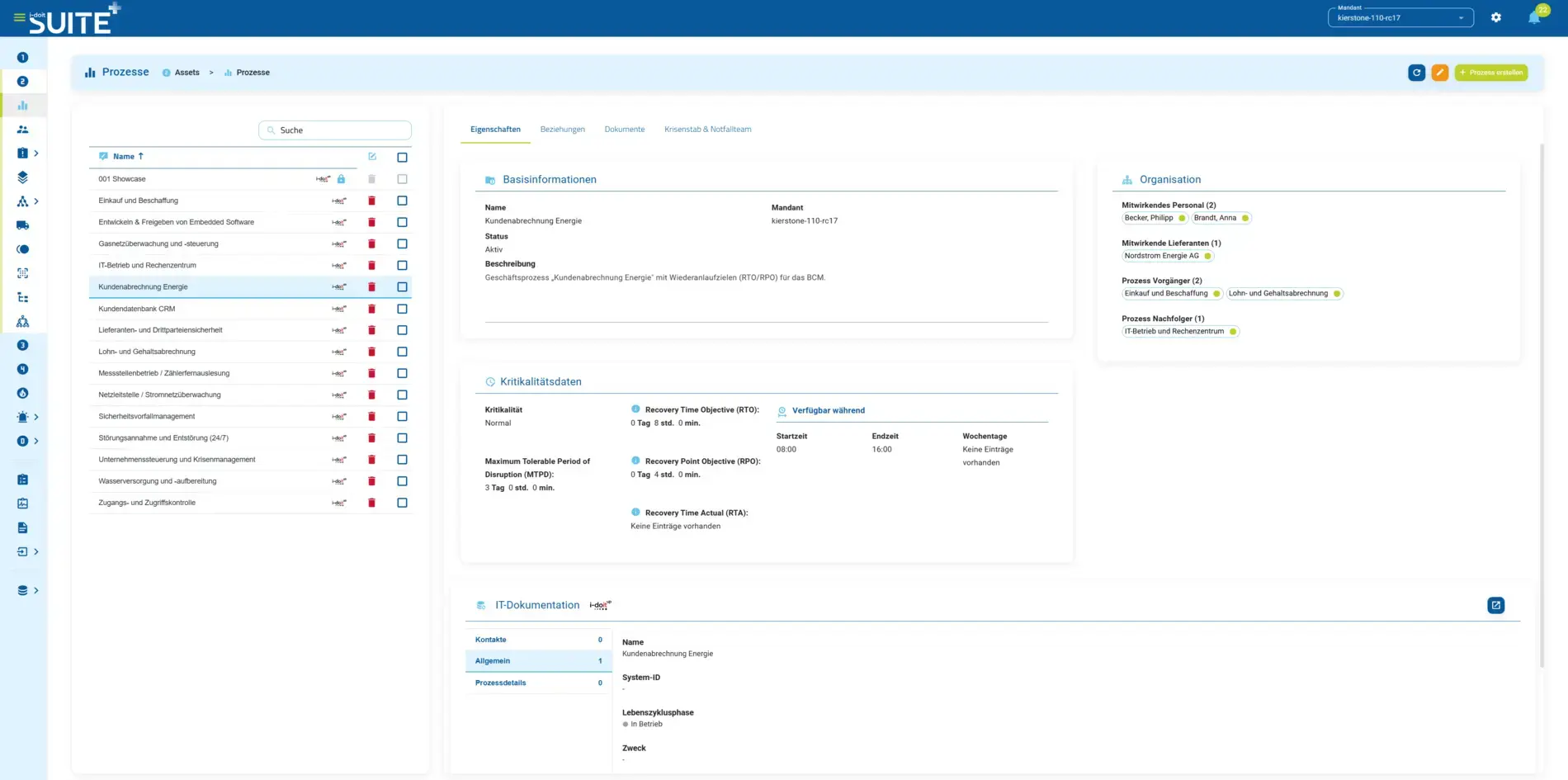
1. Asset management
Capture your business processes in a structured manner, assess their criticality, and define the consequences of failure. Document regulatory requirements directly on the respective process and build a clear responsibility hierarchy with crisis team and emergency team – optionally maintained manually or imported via interface (e.g., Active Directory), including access to existing personnel inventories from ISMS or Data Protection.

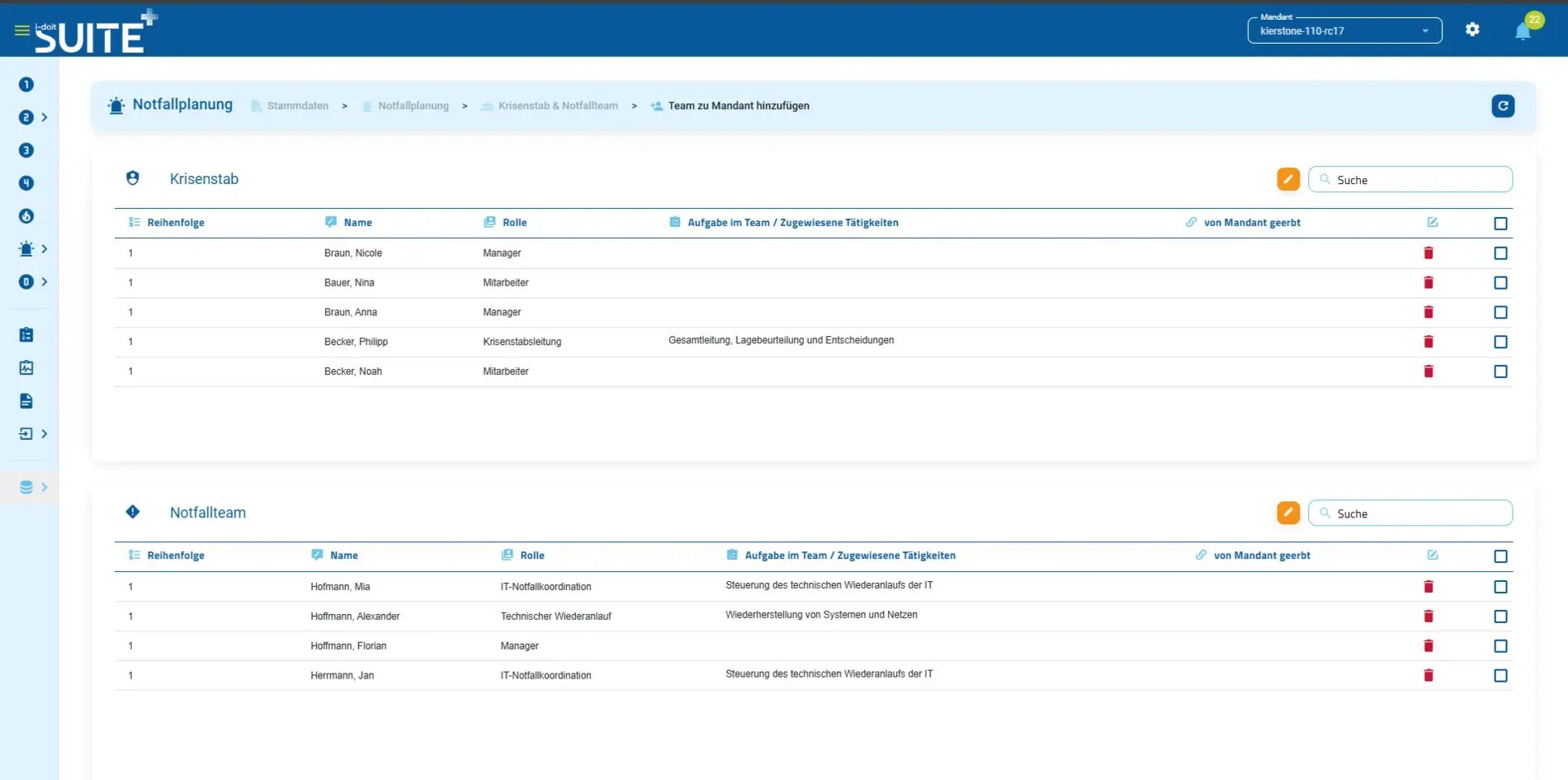
2. Crisis/emergency teams
At this point, you bring together individual processes with personnel. You have the ability to assign internal and external employees to crisis teams and emergency teams.
You can set the crisis team and emergency team across processes by tenant or individually for each process.
When a person transfers their responsibilities for processes, measures, or team membership, you can easily reassign them to another person.

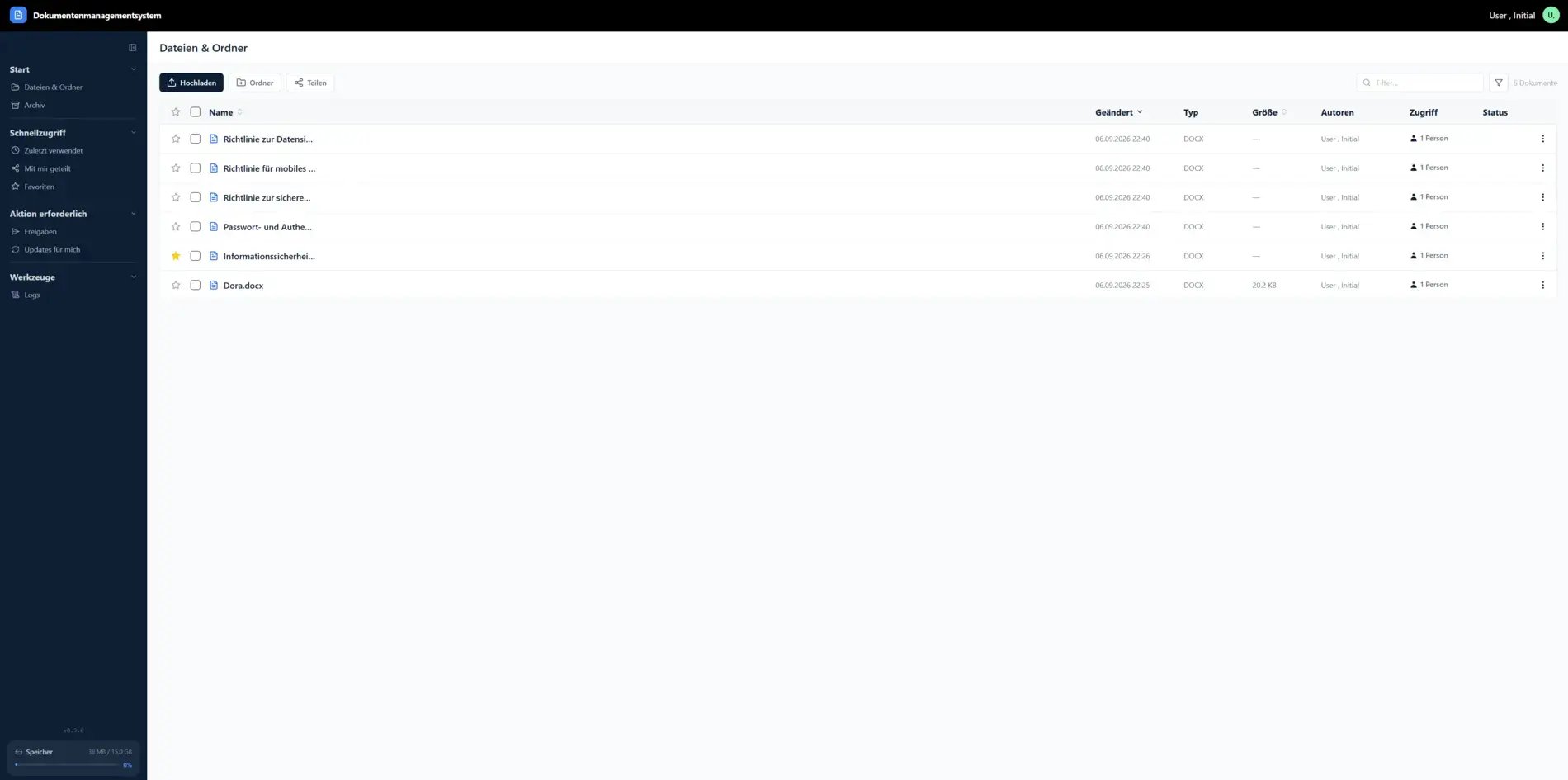
3. Document management
Capture documents relevant to emergency planning (e.g., manuals & license certificates) and images (e.g., location & floor plans) and import them into the emergency management system.
You can structure, update, or create new documents.
Additionally, you can set measures for documents in this area and store service times and contract periods.

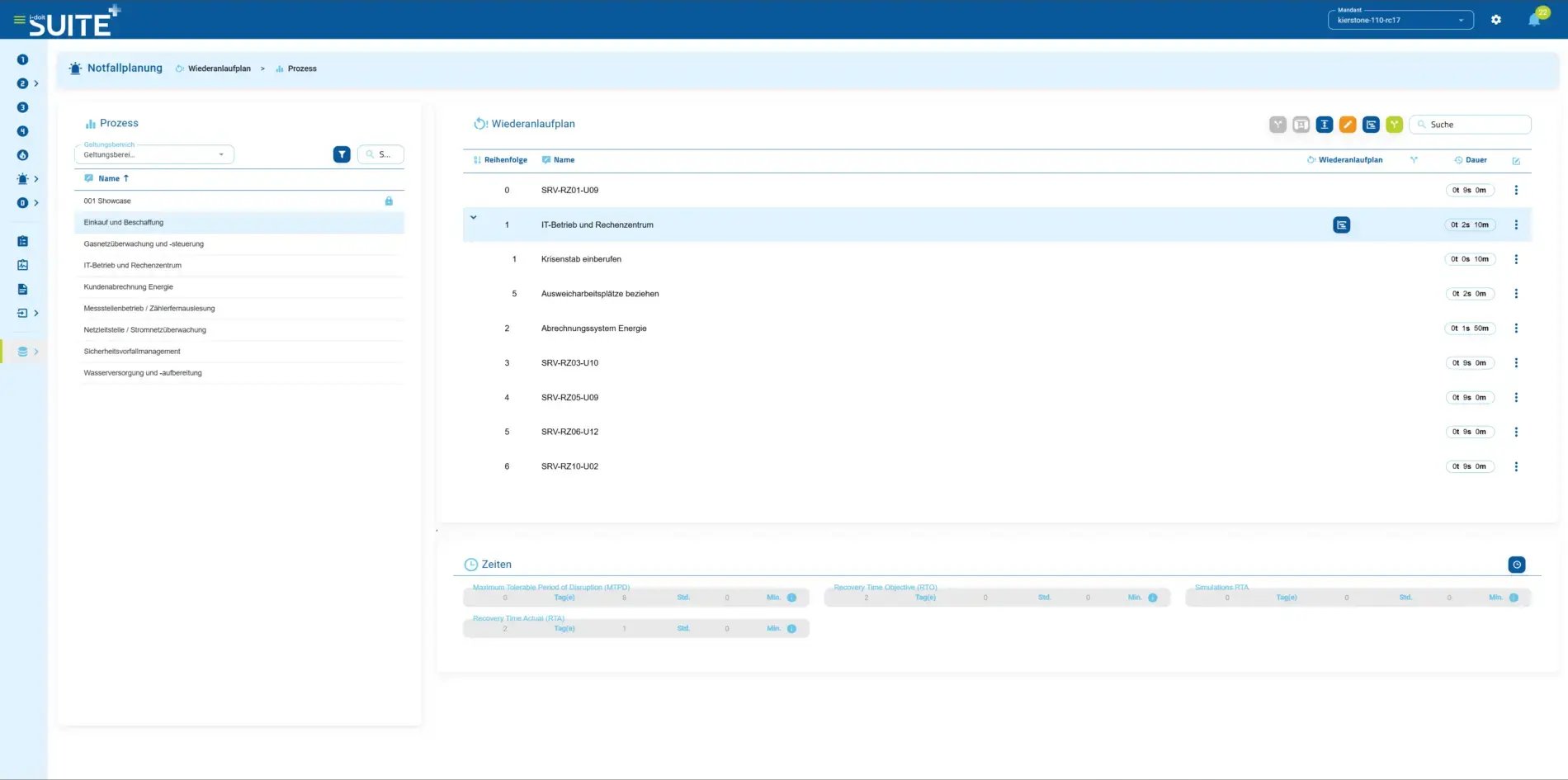
4. Recovery planning
Capture and create structured recovery plans for each individual asset and define the RTO (Recovery Time Objective) – the maximum tolerable time span for restoration.
Store the concrete steps for restarting directly on the respective asset, including dependencies to other systems and processes. In an emergency, you don't rely on improvisation or the knowledge of individual employees, but always have a clearly defined, traceable process at hand – and know exactly which steps to perform in which sequence to restore operations as quickly as possible.

Use Cases
Use cases for ISMS, risk and compliance management

You centrally manage audits, plan inspections, document results, and automatically generate audit reports.

You manage documents with revision security, version and edit them directly in the tool, and use templates as well as import functions.

i-doit supports gap analyses according to standards such as ISO 27001, ISO 9001, or NIS2 including maturity assessment, responsibilities, and document mapping.

You centrally rate and manage vendors, document contracts, and maintain contact information as well as backup suppliers.

You derive measures, distribute tasks, track deadlines, and receive automatic email notifications.

You document and assess security incidents in compliance with ISO and NIS2 standards, assign affected assets, and centrally derive measures.

Book your personal live demo
Our i-doit team will be happy to take the time to advise you personally on your application.
FAQs on i-doit Suite+ Emergency
IT emergency planning is a structured approach to business continuity that ensures organizations can respond quickly and effectively to IT outages and crises. Today, it's a mandatory requirement for most companies due to regulatory requirements like ISO 27001, NIS2, BSI 200-4, and TISAX. These standards require companies to have documented, tested emergency plans to protect critical business processes and maintain operational capability during IT incidents.
Manual emergency plans stored in documents or spreadsheets quickly become outdated, are difficult to maintain, and fail to accurately represent complex system dependencies. Digital solutions like i-doit Suite+ Emergency automate the planning process, continuously update all related data, link processes with personnel and systems, and ensure that plans remain current and reliable.
i-doit Suite+ Emergency centrally maps business processes, IT infrastructure, and personnel. Through system interfaces, data is automatically imported, failure scenarios can be realistically simulated, and tailored recovery plans are created. In an emergency, these plans can be immediately activated—structured, transparent, and efficient.
In an emergency, i-doit Suite+ Emergency enables:
- Rapid identification of critical processes
- Clear responsibilities and escalation paths
- Immediately available recovery plans
- A structured decision-making foundation for crisis teams
This saves valuable time and allows organizations to stabilize operations quickly.
Yes – i-doit Suite+ Emergency supports organizations in implementing compliant IT emergency planning according to ISO 27001 and BSI Standard 200-4. The integrated analysis and reporting functions provide strong evidence for audits, reviews, financial auditors, and cyber insurance assessments.
The solution documents roles, responsibilities, and required competencies transparently. This prevents knowledge silos where critical expertise resides with only one person. Critical knowledge remains available even when personnel are absent due to illness, vacation, or employment changes.
i-doit Suite+ Emergency is suitable for:
- Mid-sized and large organizations
- Public administration agencies
- Organizations with high compliance requirements
Organizations particularly benefit when they want to increase IT resilience, reduce business continuity risks, and professionally formalize their IT emergency planning.
Yes, i-doit Suite+ Emergency is part of the entire i-doit GRC Suite+ solution and can be deployed flexibly:
- As individual products (e.g., Emergency, ISMS, Data Protection, BCM)
- Or integrated as part of a comprehensive information security management system with shared database and unified interface