
i-doit
CMDB, ITSM, ITIL, IT-Docu







Use the i-doit AI add-ons to increase your level of automation with the help of AI!


.png?width=300&name=experienced-data-center-it-technician-installing-resized%20(1).png)
Cyberattacks by hostile nations? Negligence in IT security that only takes its toll months later? These are just some of the dangers lurking today. Companies are therefore under high pressure to effectively safeguard their information security. A central building block in this: the international standard ISO 27001. It offers you a clear framework for managing information security in a structured manner – from risk identification to the implementation of suitable measures through to regular effectiveness testing.
With ISO 27001 certification, you make one thing clear: information security is part of a clear strategy for your company. You prove that your security concept complies with international standards – transparently and comprehensibly. This creates trust among customers, partners, and authorities and strengthens your competitiveness. Find out what ISO 27001 means in detail and how your company benefits from it.
Table of Contents
1. Definition: What is ISO 27001?
ISO 27001 is the globally recognised standard for Information Security Management Systems (ISMS). The goal of ISO 27001: To reliably protect all business-relevant information against threats such as loss, manipulation, or unauthorised access – regardless of whether it is customer data, trade secrets, or internal processes.
The ISO 27001 standard was first published in 2005 and most recently updated in 2022. It is based on the British standard BS 7799 and was developed jointly by the International Organization for Standardization (ISO) and the International Electrotechnical Commission (IEC). ISO 27001 provides a structured roadmap for:
An ISMS according to ISO 27001 combines technical, organisational, and personnel measures into a holistic security concept. It is based on three central principles: confidentiality, integrity, and availability. These ensure that information is only used by authorised persons, remains unchanged, and is available at all times.
ISO 27001 certification creates clarity both internally and externally. By achieving it, you demonstrate that your company knows its information assets, has assessed risks, and actively protects its IT systems. For many organisations today, certification is a competitive advantage, if not a prerequisite for successful and trust-based business relationships.
A key benefit of ISO 27001 certification is the fulfilment of internationally recognised security standards. This strengthens your competitiveness – particularly in public and private tenders. At the same time, customers and business partners gain confidence when you implement information security consistently and systematically.
Furthermore, ISO 27001 supports you in complying with legal and regulatory requirements. The certification can also promote the optimisation of your internal workflows: processes run more efficiently, and roles as well as responsibilities are clearly defined.
The path to certification according to ISO 27001 follows a structured roadmap. It usually includes the following steps:
As part of the risk analysis, you systematically assess which threats are significant and where your company is vulnerable. On this basis, you make your decisions: Which information requires special protection? Where do technical or organisational vulnerabilities exist? And what impact would a security incident have on operations, customer relationships and reputation?
This results in a well-founded risk assessment that serves as the basis for decisions on protective measures. The following applies: Not every risk has to be completely eliminated – the key is to reduce it to an acceptable level. In this context, ISO 27001 requires conscious risk treatment: risks can be avoided, reduced, transferred (e.g. through insurance) or accepted within a defined framework.
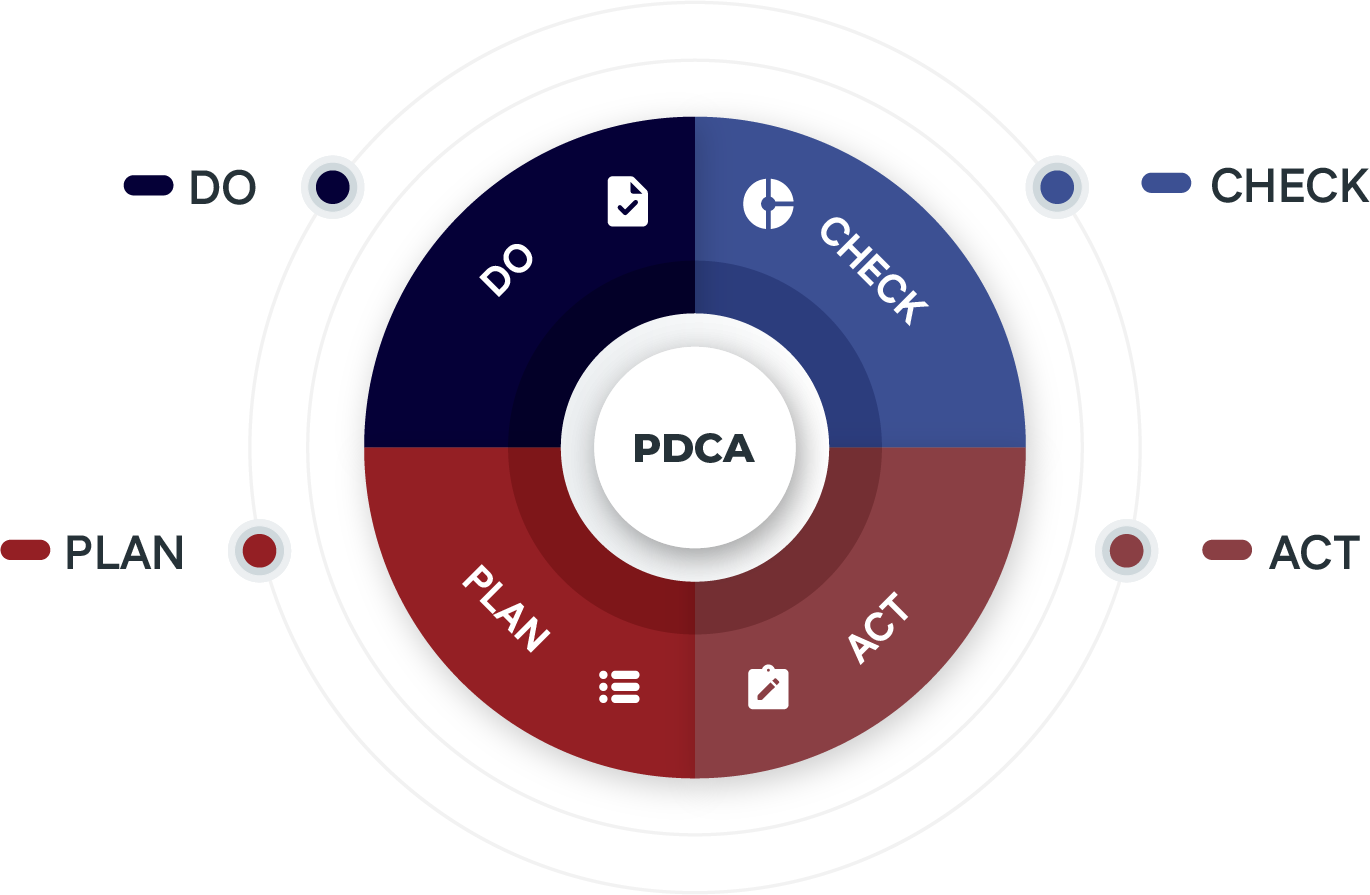
Effective risk management considers not only IT systems but also business processes, responsibilities and external factors. The assessment is based on clear criteria – such as potential damage and the probability of occurrence. In addition, there are catalogued threat scenarios. Regular reviews, clear responsibilities and implementation according to the PDCA cycle ensure that the risk analysis assessments according to ISO 27001 do not remain static.
The i-doit ISMS add-on enables the standards-compliant implementation of an ISMS according to ISO 27001. It is directly integrated into the central IT documentation. Risk analyses and security assessments are based on the specific context: they therefore refer specifically to IT assets, object groups or business processes.
Even during installation, you can import proven risk catalogues such as Annex A of ISO 27001, the IT-Grundschutz catalogue of the BSI or the IT security catalogue of the Federal Network Agency. You can adapt the risk assessment individually to your company, for example with your own damage scenarios, catalogues of measures as well as clearly defined roles, responsibilities and assessment criteria.
The add-on supports you throughout the entire implementation of the PDCA cycle. With functions such as versioning, template management, reporting and a complete change history of all devices, systems, services and other assets, it ensures seamless and audit-proof security documentation. And: thanks to the seamless integration into i-doit, you do not need any additional software.
By integrating the ISMS directly into the IT documentation (i-doit), redundant data maintenance in different tools is not necessary. This saves you money, time and resources.
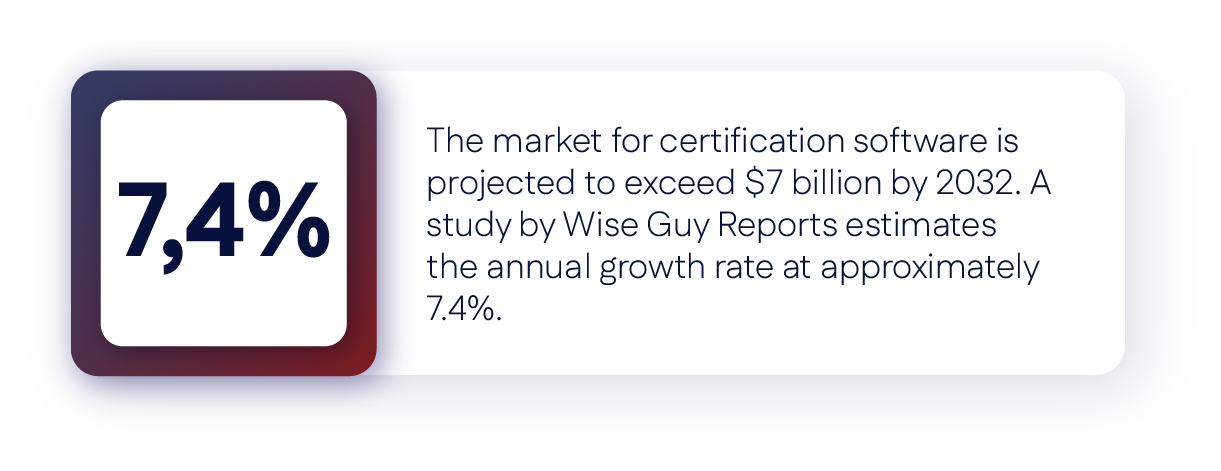
The topic of ISO 27001 is becoming increasingly important: according to a study by Wise Guy Reports, the market for corresponding certification software will rise to over 7 billion US dollars by 2032. The annual growth rate is around 7.4%. As early as 2020, according to an article in the magazine "Computers in Industry" (2022), ISO 27001 was one of the most widely used security standards worldwide. Over 45,000 certified companies and an annual growth of more than 20% underline the relevance of the standard.
The business relevance is also proven: a study of Chinese listed companies shows that certification has a positive effect on financial development. This is particularly the case when companies actively communicate their certification. Another example is provided by a current market study on the data centre industry: customers prefer service providers with ISO 27001 certification because they expect a high level of information security and trust that regulatory requirements will be met more easily as a result.
The ISO 27001 standard provides companies with a framework to ensure information security both technically and organisationally. It makes risks transparent and protective measures comprehensible. The certificate signals: this company takes information security seriously. It knows potential vulnerabilities, protects its assets and manages its IT infrastructure according to clear rules.
The result: you gain the trust of customers, partners, authorities and investors. At the same time, you benefit internally from clearly defined responsibilities, optimised interfaces and the seamless integration of security measures into everyday work. Incidentally: in many industries, ISO 27001 certification is already a prerequisite for tenders or regulatory approvals.
Are you planning the introduction of an ISO 27001-compliant ISMS and want a tool that supports your processes consistently from the start?