i-doit
CMDB, ITSM, ITIL, IT-Docu







Use the i-doit AI add-ons to increase your level of automation with the help of AI!


 4.7/5 on Capterra | 2,000+ satisfied customers
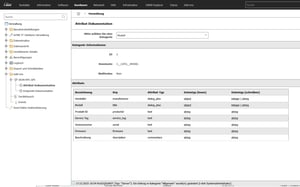
 Reading, writing and updating CMDB data
External systems can automatically read CMDB data, create and update devices.
 Automated synchronization between systems
Data is synchronized between i-doit and third-party systems on a regular or event-based basis.
 Integration of ticket, monitoring and inventory systems
Ticketing, monitoring and discovery systems can be seamlessly connected to i-doit.
 Support for individual workflows and automation
Own processes and automation can be implemented flexibly.
 Use of user-defined categories and fields
Custom categories and individual data structures can also be queried and transferred via API.
 Secure and controlled interface usage
Access via the API is controlled, traceable and individually configurable.
Secure and controlled interface usage
Access via the API is controlled, traceable and individually configurable.
How can data from connected systems be queried in a targeted manner?
In many IT landscapes, external systems require access to up-to-date CMDB information. If copies or exports are used for this, outdated data, inconsistencies and manual maintenance work quickly arise.
Connected systems can automatically access central CMDB data via the i-doit API. Assets, locations, responsibilities, relationships and dependencies are always up-to-date and can be processed directly - exactly where they are needed.
Advantages:
How is CMDB data automatically transferred to external systems?
If you maintain data in several systems, you risk inconsistencies and increased coordination effort. Changes must be available promptly and reliably everywhere.
With the i-doit API, CMDB data can be automatically transferred to external systems. Changes to assets, locations, responsibilities or relationships are forwarded directly - event-based, time-controlled or manually triggered.
Advantages:
How do you control data flows and processes centrally via flows?
Manual process control is prone to errors and scales poorly - especially in complex system landscapes.
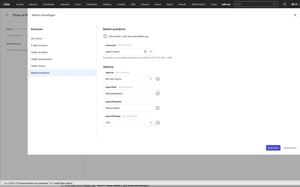
With the Flows add-on, data changes and processes in i-doit can be automated in a targeted manner. Actions are triggered based on rules as soon as data changes or defined events occur. In this way, i-doit combines CMDB, API and connected systems into consistent, traceable processes.
Advantages:
How is CMDB data automatically transferred to external systems?
If you maintain data in several systems, you risk inconsistencies and increased coordination effort. Changes must be available promptly and reliably everywhere.
With the i-doit API, CMDB data can be automatically transferred to external systems. Changes to assets, locations, responsibilities or relationships are forwarded directly - event-based, time-controlled or manually triggered.
Advantages:

Our i-doit team will be happy to take the time to advise you personally on your application.
Create powerful automations without programming knowledge, simply start them on a schedule or manually at the touch of a button.
Get 4 powerful add-ons for the price of 2! Flows, Documents, Analysis and Forms.
Automatically create documents as PDFs with daily updated data (e.g. hardware handover certificate or disaster recovery plan).
Automate the operation of your data center with the latest data from the CMDB. Events trigger and control further processes.
The maintenance add-on supports the planning, execution and documentation of maintenance and inspections. Maintenance intervals, dates and responsibilities are managed centrally and linked directly to the respective devices, installations or systems.
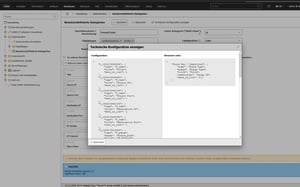
With the API add-on, data can be automatically read, written and updated in i-doit. Perfect for integrations with ticket systems, inventory tools or your own automations.
Add-on for powerful data analysis. Calculate service costs, check the data quality of the CMDB and carry out failure simulations.
Easily create forms that you can make available to users for simplified data entry. Example: Allow users to document hardware or goods themselves.
Set up an information security management system with risk analysis and management in accordance with ISO 27001.
Integrate the Checkmk2 monitoring system into i-doit. This supports comparisons between TARGET and ACTUAL from CMDB and monitoring.
Store buttons with your own triggers and start IT processes directly from i-doit - e.g. the automatic deployment of a virtual machine.
With this add-on, you can create an information security management system (ISMS) in accordance with the BSI's IT baseline protection methodology.
You connect ticket systems, automation tools and monitoring systems such as Zammad or n8n directly via API.
You document workstations with devices, peripherals and responsible persons and control handovers and returns centrally.
You control audits centrally, plan audits, document results and automatically generate audit reports.
You analyze your IT infrastructure, identify documentation gaps and create location, user or cost centre-related reports and audit PDFs.
You are automatically informed about deadlines, licenses and guarantees and can keep an eye on the status and need for action.
You automatically record clients, servers, printers and peripherals and document hardware, software and QR codes centrally.
You manage users, accounts and rights centrally, document responsibilities and control access per system, including LDAP and group connections.
You document data protection incidents in compliance with the GDPR, assess risks and derive measures centrally.
You can manage documents in an audit-proof manner, version and edit them directly in the tool and use templates and import functions.
You create technical and organizational restart plans with automatic calculation of the restart times.
i-doit supports GAP analyses according to standards such as ISO 27001, ISO 9001 or NIS2, including maturity level assessment, responsibilities and document assignment.
You link tickets to affected devices, analyze causes via dependencies and monitor SLAs centrally.
You record and uniquely identify assets using QR and barcodes, create individual labels and take a mobile inventory of devices using the app and printer tool.
You document emergency concepts, system manuals, backups and disaster recovery centrally and comprehensibly.
They document maintenance and lifecycles, make changes traceable, automate processes and keep track of responsibilities and warranty periods.
You evaluate and manage suppliers centrally, document contracts and maintain contact details and replacement suppliers.
You derive measures, distribute tasks, track deadlines and receive automatic notifications by e-mail.
You integrate monitoring data directly into the IT documentation, see asset failures and link statuses to the change history.
You document active and passive network elements including cabling, port assignment, IP addresses and configurations centrally and comprehensibly.
You manage entries and exits, including device handovers, returns and referral certificates centrally.
i-doit enables protection requirement analyses with automatic inheritance into the infrastructure, risk assessment and tracking of measures.
You document and evaluate security incidents in accordance with ISO and NIS2, assign affected assets and centrally derive measures.
You record and analyze software and licenses, monitor runtimes, users and authorizations and avoid license violations and unnecessary costs.
You document locations, rooms and infrastructure, link these to contact persons and also visualize server rooms clearly.
You document and manage contracts centrally, link them to objects and responsible parties and are automatically informed about deadlines and terms.
You keep an eye on servers, VMs, dependencies and certificates centrally and automatically synchronized.