i-doit
CMDB, ITSM, ITIL, IT-Docu







Use the i-doit AI add-ons to increase your level of automation with the help of AI!


 4.7/5 on Capterra | 2,000+ satisfied customers

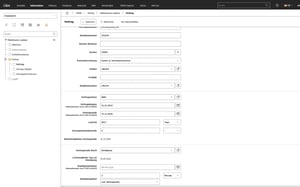
 Manage all contract types centrally
All workstations are recorded in a structured manner and can be categorized as required (office, home office, laboratory)
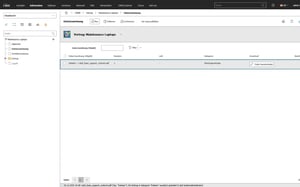
 Managing deadlines, terms and extensions
Terms, terminations and renewal options are monitored and managed centrally.
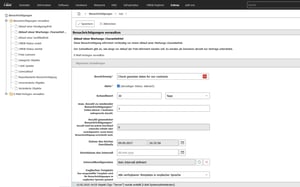
 Automatic notifications for expiring contracts
System notifications warn you in good time of the end of the contract, notice periods or necessary renewals - by e-mail or dashboard.
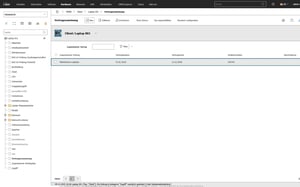
 Linking with assets, devices and locations
Each contract is clearly assigned: Buildings, rooms, server cabinets, assets, systems.
 Service providers, SLA structures and responsibilities
SLA specifications, contact persons and service levels are stored directly in the system.
 Cost center and budget management
Contract values, costs and budget planning are documented in an audit-proof manner and can be evaluated at any time.
Cost center and budget management
Contract values, costs and budget planning are documented in an audit-proof manner and can be evaluated at any time.
Why do you need an audit-proof contract overview?
Many companies manage contracts in an unstructured way - in Excel, SharePoint, mailboxes or as a loose PDF collection. Deadlines are overlooked, responsibilities are not clear and costs are difficult to track. This leads to unnecessary extensions, budget risks and a lack of auditability.
i-doit solves this problem with a central, logically linked and audit-proof contract basis. Contracts are not isolated documents, but are in the context of locations, assets, services, service providers and cost centers - including a traceable history.
Advantages:
How do you manage all contract types transparently in one place?
In practice, many contract types exist in parallel: maintenance, support, leasing, rental, licenses or service agreements. If these are stored separately, clarity and comparability are lost - and information disappears in folder structures or e-mail histories.
i-doit enables the central storage and structured maintenance of all contract types. Contract data is clearly categorized, searchable and uniformly documented - so that it is always clear which contracts are active, what they relate to and which conditions apply.
Advantages:
How do you keep an eye on terms, deadlines and extensions?
Notice periods and renewal options are easily overlooked in day-to-day business. This leads to unwanted extensions, missed notices or unplanned cost increases - often only visible when it is too late.
i-doit automatically monitors terms, deadlines and extensions and informs you in good time when action is required. Notifications can be sent to the right people based on roles (e.g. IT, purchasing or defined managers) so that nothing "slips through the cracks".
Advantages:
How do you clearly assign contracts to assets, devices and locations?
If contracts are only stored as PDFs, there is no reference to reality: Which device is affected? Which location? Which cost center? And who is responsible? This leads to queries, coordination efforts and wrong decisions during operation.
i-doit links contracts directly to the objects to which they apply - such as devices, software licenses, server cabinets, rooms, buildings or entire locations. This means that it is always clear which contract applies to what and what dependencies exist.
Advantages:
How do you secure service providers, SLAs and responsibilities without coordination chaos?
In the event of a malfunction, it takes time to find the right service provider, clarify contact persons or check SLA specifications - especially if information is distributed or outdated. Unclear escalation paths extend downtimes and increase risks.
i-doit documents service providers, service providers and manufacturers together with the associated contracts. SLA specifications, response times and escalation paths are linked directly to the affected objects so that it is immediately clear who needs to act in an emergency.
Advantages:
How do you make budgets, cost centers and controlling truly controllable?
Without proper cost allocation, contract controlling often stops at estimates or Excel evaluations. As a result, potential savings are overlooked, budgets are planned incorrectly and decisions are based on incomplete figures.
i-doit enables the systematic management and evaluation of contract costs, budgets and cost centers. Costs can be displayed transparently per contract, property or location and compared over time - documented in an audit-proof manner and immediately usable for controlling and management.
Advantages:

Our i-doit team will be happy to take the time to advise you personally on your application.
Create powerful automations without programming knowledge, simply start them on a schedule or manually at the touch of a button.
Get 4 powerful add-ons for the price of 2! Flows, Documents, Analysis and Forms.
Automatically create documents as PDFs with daily updated data (e.g. hardware handover certificate or disaster recovery plan).
Automate the operation of your data center with the latest data from the CMDB. Events trigger and control further processes.
The maintenance add-on supports the planning, execution and documentation of maintenance and inspections. Maintenance intervals, dates and responsibilities are managed centrally and linked directly to the respective devices, installations or systems.
With the API add-on, data can be automatically read, written and updated in i-doit. Perfect for integrations with ticket systems, inventory tools or your own automations.
Add-on for powerful data analysis. Calculate service costs, check the data quality of the CMDB and carry out failure simulations.
Easily create forms that you can make available to users for simplified data entry. Example: Allow users to document hardware or goods themselves.
Set up an information security management system with risk analysis and management in accordance with ISO 27001.
Integrate the Checkmk2 monitoring system into i-doit. This supports comparisons between TARGET and ACTUAL from CMDB and monitoring.
Store buttons with your own triggers and start IT processes directly from i-doit - e.g. the automatic deployment of a virtual machine.
With this add-on, you can create an information security management system (ISMS) in accordance with the BSI's IT baseline protection methodology.
You connect ticket systems, automation tools and monitoring systems such as Zammad or n8n directly via API.
You document workstations with devices, peripherals and responsible persons and control handovers and returns centrally.
You control audits centrally, plan audits, document results and automatically generate audit reports.
You analyze your IT infrastructure, identify documentation gaps and create location, user or cost centre-related reports and audit PDFs.
You are automatically informed about deadlines, licenses and guarantees and can keep an eye on the status and need for action.
You automatically record clients, servers, printers and peripherals and document hardware, software and QR codes centrally.
You manage users, accounts and rights centrally, document responsibilities and control access per system, including LDAP and group connections.
You document data protection incidents in compliance with the GDPR, assess risks and derive measures centrally.
You can manage documents in an audit-proof manner, version and edit them directly in the tool and use templates and import functions.
You create technical and organizational restart plans with automatic calculation of the restart times.
i-doit supports GAP analyses according to standards such as ISO 27001, ISO 9001 or NIS2, including maturity level assessment, responsibilities and document assignment.
You link tickets to affected devices, analyze causes via dependencies and monitor SLAs centrally.
You record and uniquely identify assets using QR and barcodes, create individual labels and take a mobile inventory of devices using the app and printer tool.
You document emergency concepts, system manuals, backups and disaster recovery centrally and comprehensibly.
They document maintenance and lifecycles, make changes traceable, automate processes and keep track of responsibilities and warranty periods.
You evaluate and manage suppliers centrally, document contracts and maintain contact details and replacement suppliers.
You derive measures, distribute tasks, track deadlines and receive automatic notifications by e-mail.
You integrate monitoring data directly into the IT documentation, see asset failures and link statuses to the change history.
You document active and passive network elements including cabling, port assignment, IP addresses and configurations centrally and comprehensibly.
You manage entries and exits, including device handovers, returns and referral certificates centrally.
i-doit enables protection requirement analyses with automatic inheritance into the infrastructure, risk assessment and tracking of measures.
You document and evaluate security incidents in accordance with ISO and NIS2, assign affected assets and centrally derive measures.
You record and analyze software and licenses, monitor runtimes, users and authorizations and avoid license violations and unnecessary costs.
You document locations, rooms and infrastructure, link these to contact persons and also visualize server rooms clearly.
You document and manage contracts centrally, link them to objects and responsible parties and are automatically informed about deadlines and terms.
You keep an eye on servers, VMs, dependencies and certificates centrally and automatically synchronized.